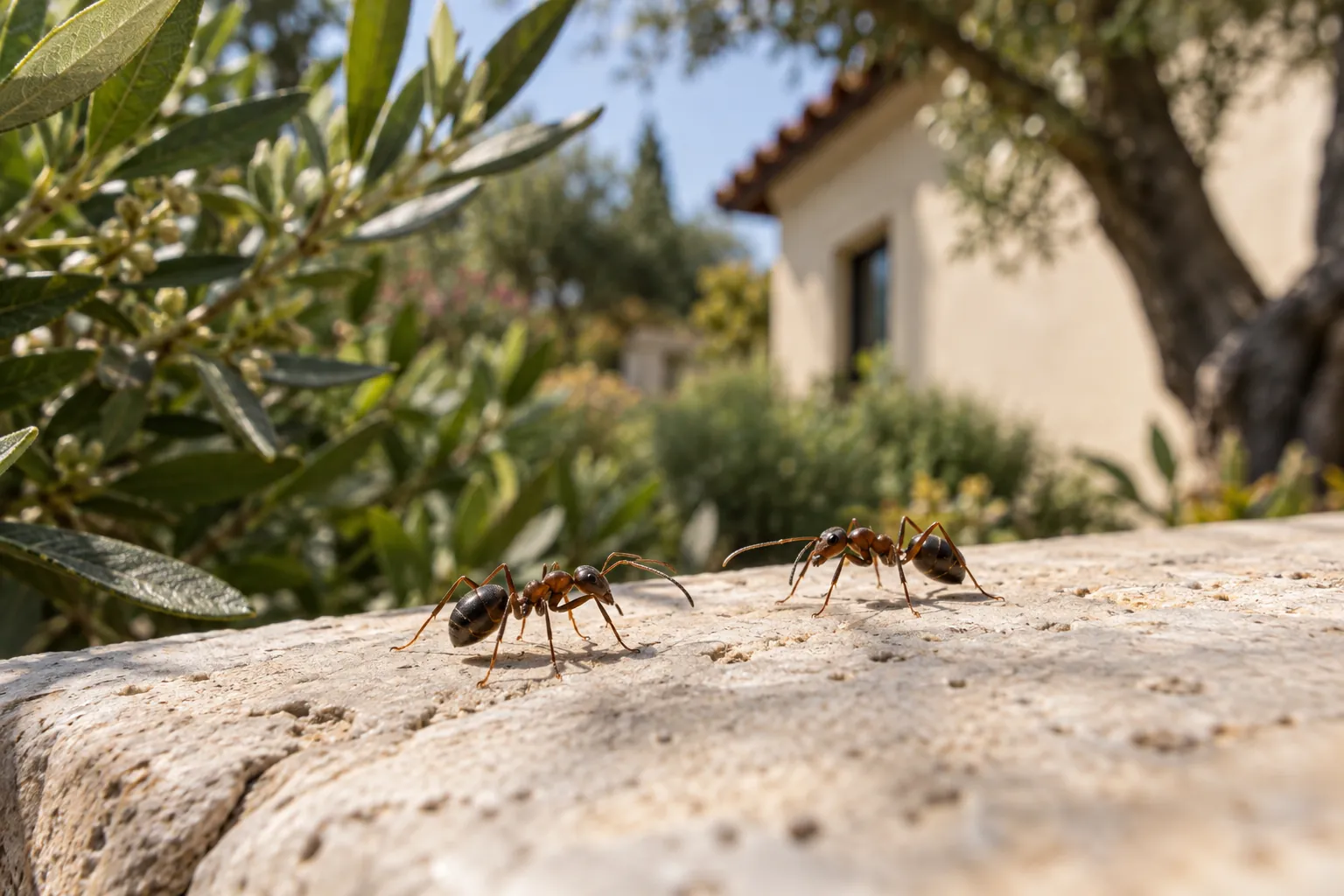
Ants you are likely to find in a house
Odorous house ants
Look for a small, dark brown or black ant that smells of rotten coconut if you crush it. Colonies grow large and nest in wall voids, under sinks and out in landscaping, and trails lead to sweets and water.
Pavement ants
Dark brown, nesting under slabs, driveways and sidewalk cracks, with small mounds of soil beside pavement. They enter through slab cracks and carry food back to the nest.
Carpenter ants
Large ants, black or red and black, dig their galleries in damp or damaged wood. A nest nearby shows itself through coarse, sawdust-like frass piled up, faint rustling in the walls, or winged ants emerging in spring.
Argentine ants
This ant ranges from light to dark brown and builds enormous linked colonies in warm regions. It climbs walls in long lines, most visibly after rain or a dry spell.
Moisture, wood and carpenter ant damage
Carpenter ants dig through wood rather than eat it, and they favor timber that leaks, condensation or rot have softened. The nest is usually close to the water source, whether that is a leaking roof, a failed window seal, a deck attached to siding or a gutter full of debris.
If the ants are treated and the water problem is left alone, the wood stays soft and the ants are likely to come back. The complete answer from a provider includes locating the moisture source and telling you to repair it.
Where ants get into the home
- Tree limbs, shrubs and vines that touch the roof or siding
- Cracks in the foundation and slab expansion joints
- Utility lines, dryer vents and AC lines entering the wall
- Door thresholds, weather stripping and window frames
- Gaps around plumbing under sinks and behind appliances

Ant prevention you can do this week
- Fix dripping faucets and wet spots under sinks
- Seal visible gaps with caulk and add door sweeps
- Take out trash and recycling often, and rinse containers
- Store food, pet food and sugary items in sealed containers and wipe crumbs at night
- Trim plants so nothing touches the house, and keep mulch a few inches from the foundation
Why bait beats spray for most ants
A spray reaches only the workers on the trail, so the colony is still there afterward. Slow-acting bait works differently: workers carry it to the nest and pass it around, and it ends up weakening the queen and the brood. Gel and granular baits are set along the trails, and a non-repellent perimeter treatment adds a barrier around the outside of the home.
A repellent spray or wipe can send a colony off in several directions and start new ones. Wait until the bait has worked before you spray over or clean up the trail.
How an ant control visit works, step by step
A good visit follows the same order every time, whatever the pest. Knowing the order helps you compare what each company offers and spot a visit that skips the first two steps.
- Inspection: the technician walks the outside first (foundation, vents, utility lines, eaves, fence lines, mulch) and then the inside (kitchen, bathrooms, garage, attic or crawl space).
- Identification: the species is named from the insect, droppings, damage or trail, because the right product and method depend on it.
- Plan: the provider explains what will be done, which products or devices will be used, and what you need to do before and after.
- Treatment or exclusion: the work is done in the places the inspection found, not by spraying every room.
- Follow-up: you get a date for the next check and a clear answer on what to report if activity returns.
What makes ant control different in El Cajon
El Cajon is an East County San Diego city with hills, canyons, many apartments and single-family homes with stucco walls and tile roofs. Argentine ants form large trails in warm, dry spells and after rain, especially around irrigated yards.
Roof rats use palms, fences and wires to reach attics and rooflines. Drywood termites are common in Southern California homes and leave small pellets called frass. Put the same question to every provider you speak with: how do these local conditions alter the approach at your address? A technique that suits one climate or style of housing may do little in another.
Ant control across El Cajon and nearby cities
In El Cajon, California, Pest Control El Cajon CA serves ZIP codes: . Providers working in La Mesa, Santee, Lakeside, Spring Valley and Lemon Grove also receive calls and requests. Each address is checked individually, which is why it helps to give your ZIP code on the call.
Use Call Now at the top of the page, describe what you found, and you will be connected with an independent provider in the area. The provider confirms the address, inspects the property and gives you the scope in writing.