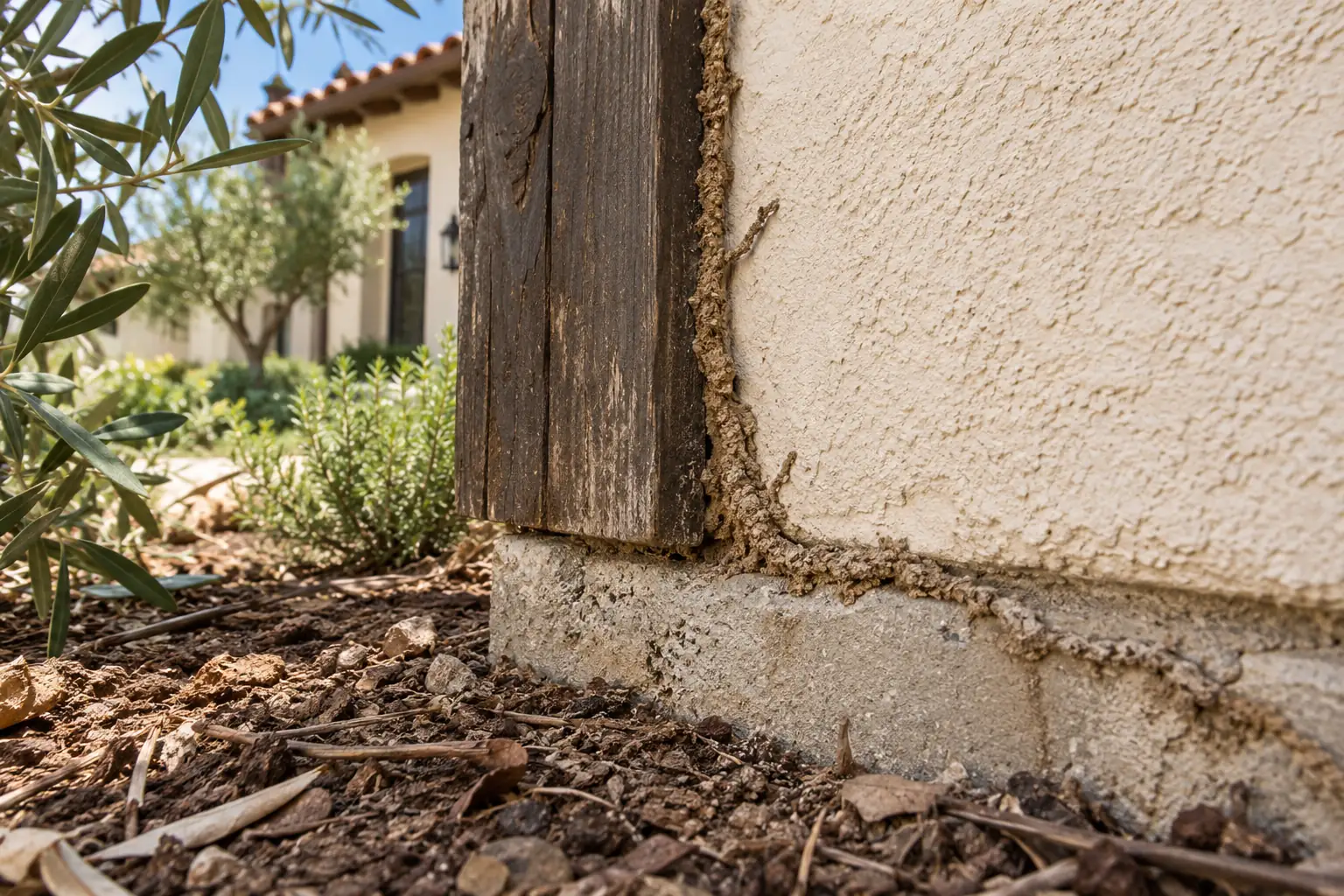
Signs of termites in a house
- Bubbling or buckling paint, warped doors and windows that suddenly stick, and soft spots in baseboards
- Mud tubes: pencil-width tunnels of soil on foundation walls, piers or sill plates
- Swarmers: winged termites near windows and lights, usually in spring, and piles of shed wings
- Frass: tiny six-sided wood pellets from drywood termites, kicked out of small holes
- Hollow-sounding or sagging wood that sounds papery when tapped with a screwdriver handle
What happens after treatment
Results from treated soil and bait stations arrive over a period of weeks, and old mud tubes may stay visible long after the termites are gone. A good provider explains what to watch for, schedules the next inspection and spells out what the written guarantee includes and excludes.
Do not knock down or scrape active mud tubes ahead of the inspection; a photograph does the job without disturbing the evidence.
Termite treatment methods compared
| Method | How it works | Typical use |
|---|---|---|
| Moisture and wood-to-soil fixes | Removing wood contact, repairing leaks and improving drainage | Every case, because it removes what termites need |
| Structural fumigation (tenting) | A gas fills the whole structure for a set time while the home is vacated | Widespread drywood termites in several areas of the house |
| Spot and localized wood treatment | Foam, dust or injected product placed into the infested wood | Small drywood infestations in accessible wood |
| Liquid termiticide (soil trench and rod) | A treated zone in the soil around the foundation stops termites from reaching the structure | Subterranean termites around slab and crawl space foundations |
| Bait stations | Stations in the ground hold a slow-acting bait that workers carry back to the colony | Subterranean termites when soil treatment is hard, or alongside it |

Prevent termites around the house
- Store firewood, lumber and cardboard off the ground and away from the foundation
- Keep mulch, soil and plants a few inches below siding and out of contact with wood
- Schedule an inspection every year, and after any flood or major plumbing leak
- Seal cracks around pipes and utility penetrations
- Fix leaking gutters, hose bibs, AC condensate lines and irrigation spray against the wall
Subterranean, drywood and Formosan termites
Because subterranean termites nest underground and depend on moisture, they construct mud tubes to get up to the wood above the soil, and across much of the country they are the leading wood-destroying insect. Drywood termites take a different route: they get in through attic vents, eaves and cracks, then live wholly inside dry timber and leave frass behind. The Formosan termite, found in Gulf and southeastern states, is an aggressive subterranean species whose colonies grow very large.
If a provider identifies the termite and shows you the places where it is feeding, the first job has been done properly. Any treatment decided ahead of the identification amounts to a guess.
How a termite control visit works, step by step
A good visit follows the same order every time, whatever the pest. Knowing the order helps you compare what each company offers and spot a visit that skips the first two steps.
- Inspection: the technician walks the outside first (foundation, vents, utility lines, eaves, fence lines, mulch) and then the inside (kitchen, bathrooms, garage, attic or crawl space).
- Identification: the species is named from the insect, droppings, damage or trail, because the right product and method depend on it.
- Plan: the provider explains what will be done, which products or devices will be used, and what you need to do before and after.
- Treatment or exclusion: the work is done in the places the inspection found, not by spraying every room.
- Follow-up: you get a date for the next check and a clear answer on what to report if activity returns.
Questions to ask before you agree to any termite control
- How many visits are in the plan, and what happens if activity returns?
- What will you seal, remove or fix, and what stays my job?
- What will you write down for me: scope, exclusions, follow-up and product list?
- Which products, baits or devices will you use, and where will they go?
- Who is on site, and can you show the state licence or applicator ID for the work?
What makes termite control different in El Cajon
El Cajon is an East County San Diego city with hills, canyons, many apartments and single-family homes with stucco walls and tile roofs. Argentine ants form large trails in warm, dry spells and after rain, especially around irrigated yards.
Roof rats use palms, fences and wires to reach attics and rooflines. Drywood termites are common in Southern California homes and leave small pellets called frass. Put the same question to every provider you speak with: how do these local conditions alter the approach at your address? A technique that suits one climate or style of housing may do little in another.
Termite control across El Cajon and nearby cities
In El Cajon, California, Pest Control El Cajon CA serves ZIP codes: . Providers working in La Mesa, Santee, Lakeside, Spring Valley and Lemon Grove also receive calls and requests. Each address is checked individually, which is why it helps to give your ZIP code on the call.
Use Call Now at the top of the page, describe what you found, and you will be connected with an independent provider in the area. The provider confirms the address, inspects the property and gives you the scope in writing.